
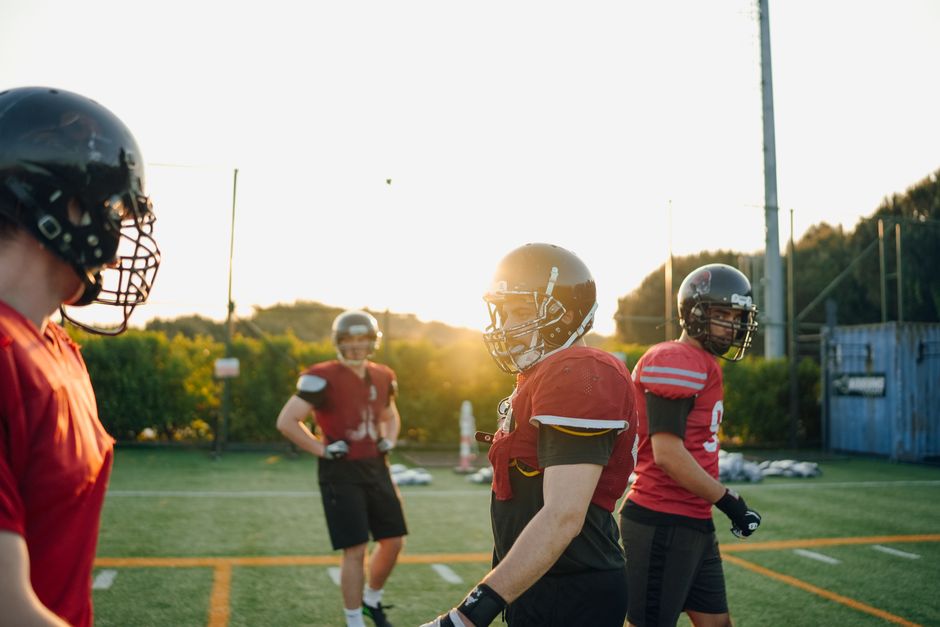
What It Really Takes to Master American Football Training Skills
American football training skills are the foundation that separates players who look good in practice from those who perform when the game is on the line.
Here is a quick breakdown of the core skills every football player needs to develop:
| Skill Area | Key Focus Points |
|---|---|
| Agility & Footwork | Direction changes, lateral quickness, balance |
| Passing & Catching | Grip, release, hand placement, ball security |
| Blocking & Tackling | Leverage, pad level, head-up technique |
| Speed & Reaction Time | Acceleration, explosive first step, decision-making |
| Position-Specific Skills | Vision, route running, pass protection, pursuit angles |
| Strength & Conditioning | Power, endurance, injury prevention |
Football is a physically demanding sport that requires strength, speed, and split-second decision-making — all at once. Whether you are a youth player learning the basics or a high school athlete pushing toward the next level, the gap between good and great comes down to how deliberately you train each of these areas.
Most players work hard. The ones who rise work smart.
I’m Kevin O’Shea, a Certified Strength and Conditioning Specialist and Wide Receiver Coach with hands-on experience developing American football training skills at the high school level, including coaching an offense that produced the leading receiver in school history. In this guide, I’ll walk you through everything — from position-specific drills to progressive training plans — so you can build a complete game, not just a highlight reel.
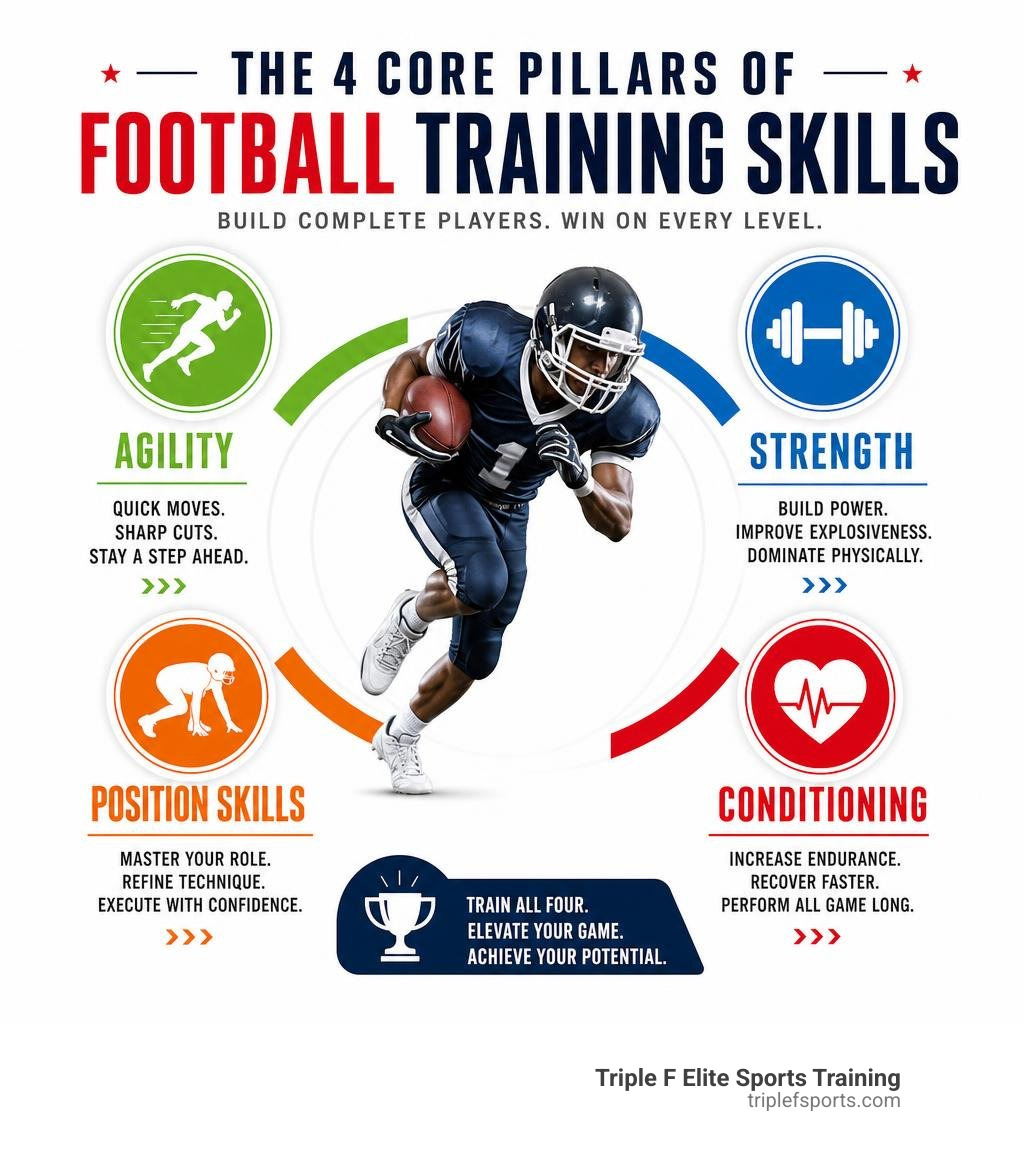
Handy american football training skills terms:
Position-Specific American Football Training Skills
To build an elite football team, we cannot rely on general athletic development alone. Football is a game of extreme specialization. The physical and cognitive demands placed on a running back are vastly different from those placed on an offensive tackle. True positional mastery requires isolating the exact technical skills required for each role on the gridiron.
Take the running back position, for example. While raw speed is a gift, elite running backs excel due to their superior field vision and spatial awareness. Vision is a highly cognitive skill that can actually be trained. We encourage our athletes to actively study film of their own carries to analyze what they saw in real time versus what the lanes actually offered.
Beyond vision, ball security is the absolute threshold issue for any ball carrier. If you cannot secure the football, coaches will quickly find someone else who can. We teach our athletes to maintain five points of contact to lock the ball down:
- The Palm: Covering the front tip of the ball.
- The Fingers: Wrapped securely around the nose.
- The Forearm: Pressed firmly against the outer leather.
- The Ribs: Compressing the ball against the torso.
- The Bicep: Clamped down over the top of the ball.
For a deeper look into these positional requirements, check out our comprehensive How to play running back — complete training guide.
On the other side of the ball, the trenches require entirely different mechanics. Linemen must master leverage, hand placement, and footwork out of their stance. Our specialized Offensive Line Sports Training programs focus on building the explosive hip power and lateral stability required to control the line of scrimmage, protect the pocket, and pave the way for the run game.
Quarterback and Receiver Synergy in American Football Training Skills
A successful passing attack is built on razor-sharp timing and mutual trust. To develop this synergy, quarterbacks and wide receivers must master their individual mechanics before they can successfully connect on game day.
For quarterbacks, mechanics must be highly repeatable. We utilize Everyday Drills (EDDs) during self-contained individual periods to isolate and refine throwing platforms, footwork, and pre-snap decision-making. By keeping these drills tight—typically involving small groups of two to six quarterbacks—we maximize repetitions without needing to wear out our receivers’ legs.
Our quarterback throwing progression begins early during pre-practice warm-ups, starting at a distance of 10 yards and systematically stepping back to 15, 20, 25, and 30 yards. During this progression, we train two distinct throwing levels:
- Level 1 Throws (10–25 yards): Driven with high velocity and minimal air under the ball to squeeze passes into tight windows.
- Level 2 Throws (25–30 yards): Lofted with touch to drop over linebackers but in front of deep safeties.
To learn more about the structure of these isolated individual periods, see the coaching strategies detailed in Developing Quarterback Fundamentals Through EDDs – AFCA.
For wide receivers, route running and catching mechanics are the keys to unlocking explosive plays. Receivers must master the 15 basic-to-advanced routes of the route tree, focusing on tight pivots, sudden directional changes, and high-speed cuts. When the ball is in the air, proper hand positioning is vital. We teach receivers to form a diamond with their thumbs and index fingers for catches above the waist, and pinkies-together for low passes, always tucking the ball immediately upon impact. To eliminate dropped passes, we run specialized drills detailed in our guide on No More Drops: The Best Catching Drills for Football Players.
Lineman and Defensive Front American Football Training Skills
Games are won and lost in the trenches. For offensive and defensive linemen, as well as linebackers, physical dominance is a product of technique, leverage, and reaction time.
Offensive linemen must master the drive block, firing low out of a three-point stance, engaging the defender with a powerful hand punch to the breastplate, and locking out their arms while driving their legs to displace the opponent.
Defensive front players must counter this with exceptional block shedding and pass-rush moves. We utilize the Chute Drill vs Quick Set to train our defensive linemen to explode out of their stance while staying low, preventing offensive linemen from establishing leverage. We also practice the Redirect Drill to help defenders read backfield flow and transition instantly from a pass rush to pursuing a lateral run play.
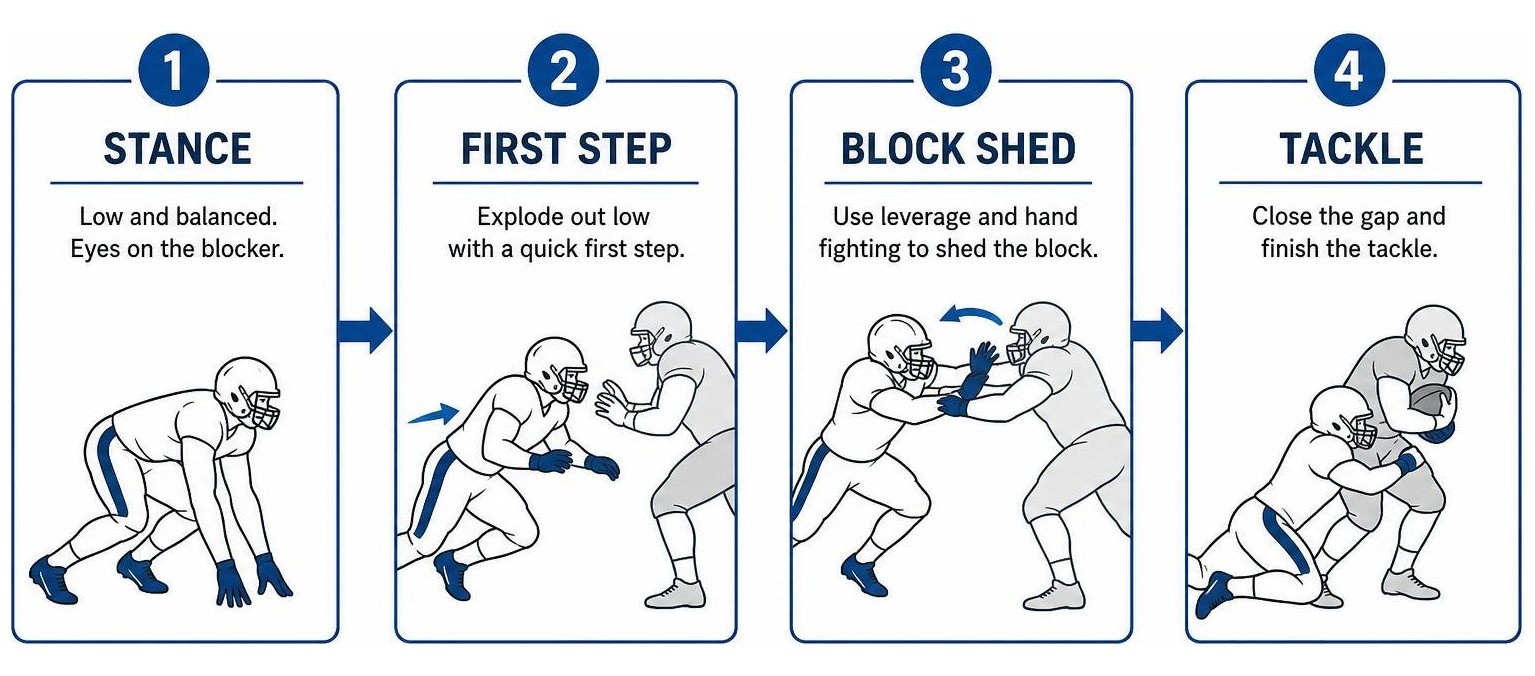
For linebackers and defensive backs, open-field tackling and pursuit angles are critical. We teach the Shed and Go drill, which combines block shedding, open-space navigation, and proper wrapping technique into one continuous flow. To build these instincts safely and aggressively, we provide structured, high-intensity Defensive Line & Linebacker Sports Training that prepares athletes to dominate the defensive front.
Essential Drills for Agility, Footwork, and Reaction Time

Agility in American football is not just about raw speed; it is the ability to accelerate, decelerate, and change direction efficiently without losing balance or momentum. A running back who can plant his foot and cut will always pick up more yards than a track sprinter who cannot change directions smoothly.
To build elite foot speed and coordination, the speed ladder is an invaluable tool. We utilize classic patterns like the Ickey Shuffle (two feet in, one foot out) to establish rhythm, rapid foot placement, and body control.
Once foot speed is established, we transition to change-of-direction drills. The 3-Cone Drill and the 5-10-5 Pro Agility Shuttle are the industry gold standards for measuring and training an athlete’s ability to stop, restart, and redirect.
- The 5-10-5 Shuttle: Spaced five yards apart, the athlete starts in a three-point stance, lateral-shuffles 5 yards to the right, touches the line, sprints 10 yards back to the far left, touches the line, and finishes by sprinting 5 yards back through the center starting point.
To take your footwork to the next level, you can explore the complete breakdown of Which American football agility drills work best?.
When executing these drills, selection and progression are key. We always run agility and footwork drills immediately after a dynamic warm-up, while the central nervous system is fresh. Performing agility drills under heavy fatigue ruins movement quality and increases injury risk.
Designing a Progressive Football Training Plan
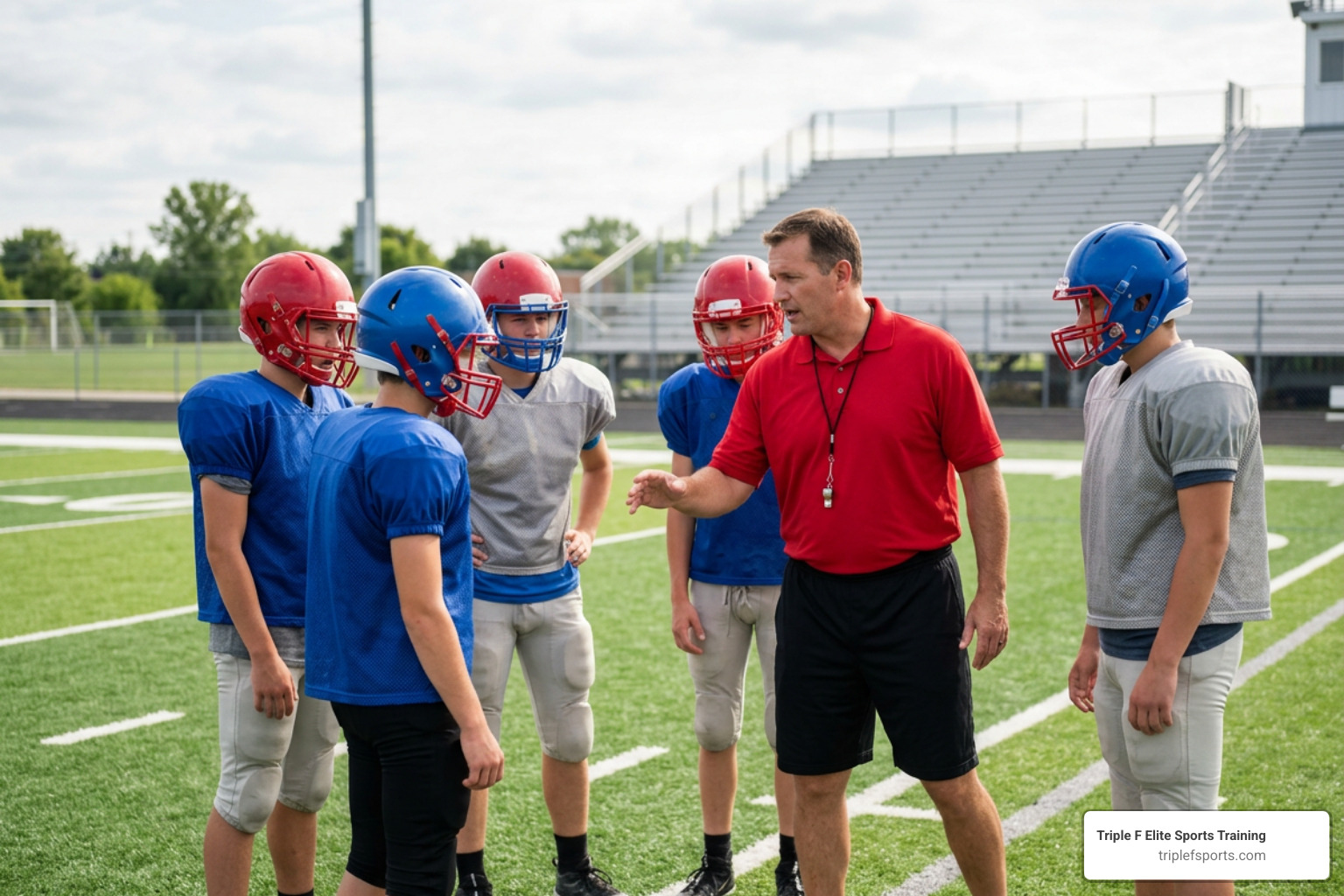
Building elite american football training skills is a long-term journey. A successful program must align with the principles of Long-Term Athlete Development (LTAD). This means we do not train an eight-year-old the same way we train a college-bound high school senior.
An effective, structured practice session should always include the following components:
- Dynamic Warm-Up (10-15 mins): Elevating core temperature, activating key muscle groups, and preparing the joints.
- Skill Builders / EDDs (15-20 mins): High-repetition, position-specific technical drills.
- Team/Group Time (20-30 mins): Integrating individual skills into broader offensive and defensive schemes.
- Conditioning (10 mins): Targeted energy system development (such as interval sprints or gassers) to build game-day stamina.
For a deeper look into designing these structured, high-yield practice scripts, refer to the Player Progression Guide.
Furthermore, we must balance on-field skill work with off-field physical preparation. Our approach to Beyond the Basics: Key Components of Football Sports-Specific Training highlights how integrated strength, mobility, and recovery programs protect athletes from injury while maximizing their on-field speed and power.
Age-Appropriate Drill Progression
To keep athletes engaged and developing safely, we scale the complexity and physical demands of our drills by age group:
- Stage 1: Discover & Play (Ages 5–10): At this early stage, we treat training as global cross-training. We focus on building fundamental physical literacy—running, jumping, throwing, and catching—using informal play and fun games. We do not use formal scoreboards or intense competition. Instead, we prepare kids for future contact through tumbling, rolling, and balance games to build spatial awareness.
- Middle School Fundamentals (Ages 11–13): Here, we introduce position-specific skills, basic route running, and formal ball security drills. We also begin tracking training volumes and game touches (ideally keeping running backs to 12–15 touches per game) to manage physical loads.
- Varsity Execution (Ages 14–18): This stage focuses on high-speed execution, complex tactical systems, and loaded strength training. High school athletes are trained to make rapid decisions under pressure, with running backs managing up to 18–22 touches per game safely.
To find age-appropriate templates you can use for your next practice, check out The Ultimate Playbook of Football Drills for Young Players.
Offseason Strength and Conditioning
True athletic dominance is forged in the offseason. To build players who are strong, explosive, and durable enough to withstand high-speed impacts, we utilize the renowned Conjugate Method. Unlike traditional block periodization, which trains one physical attribute at a time (and risks losing others), the Conjugate Method trains absolute strength, explosive power, and hypertrophy concurrently.
We structure our offseason program around a highly effective four-day weekly schedule:
- Monday (Max Effort Lower): Heavy compound movements (like squats or deadlifts) to recruit maximum motor units and build absolute strength.
- Wednesday (Max Effort Upper): Heavy upper-body pressing (like bench press variations) to build upper-body power and joint durability.
- Friday (Combined Dynamic Effort): Lighter weights moved at maximum velocity to develop explosive speed and rate of force development.
- Saturday/Sunday: General conditioning and active recovery.
By incorporating this structured approach, our athletes build elite power and speed. To see how you can transform your physical preparation in just one month, read our guide on How to Improve Your Football Skills in 30 Days.
Leveraging Technology and Evaluation Tools in Player Development
In the modern landscape of athletic development, relying on gut feeling alone is no longer enough. We utilize cutting-edge technology and evaluation tools to measure progress, identify physical asymmetries, and drive data-backed coaching decisions.
One of our favorite tools for cognitive and physical reaction training is the BlazePod system. These light-based, reactive training pods introduce unpredictable visual cues into standard agility drills, forcing the brain to process information and make split-second decisions—just like in a real game.
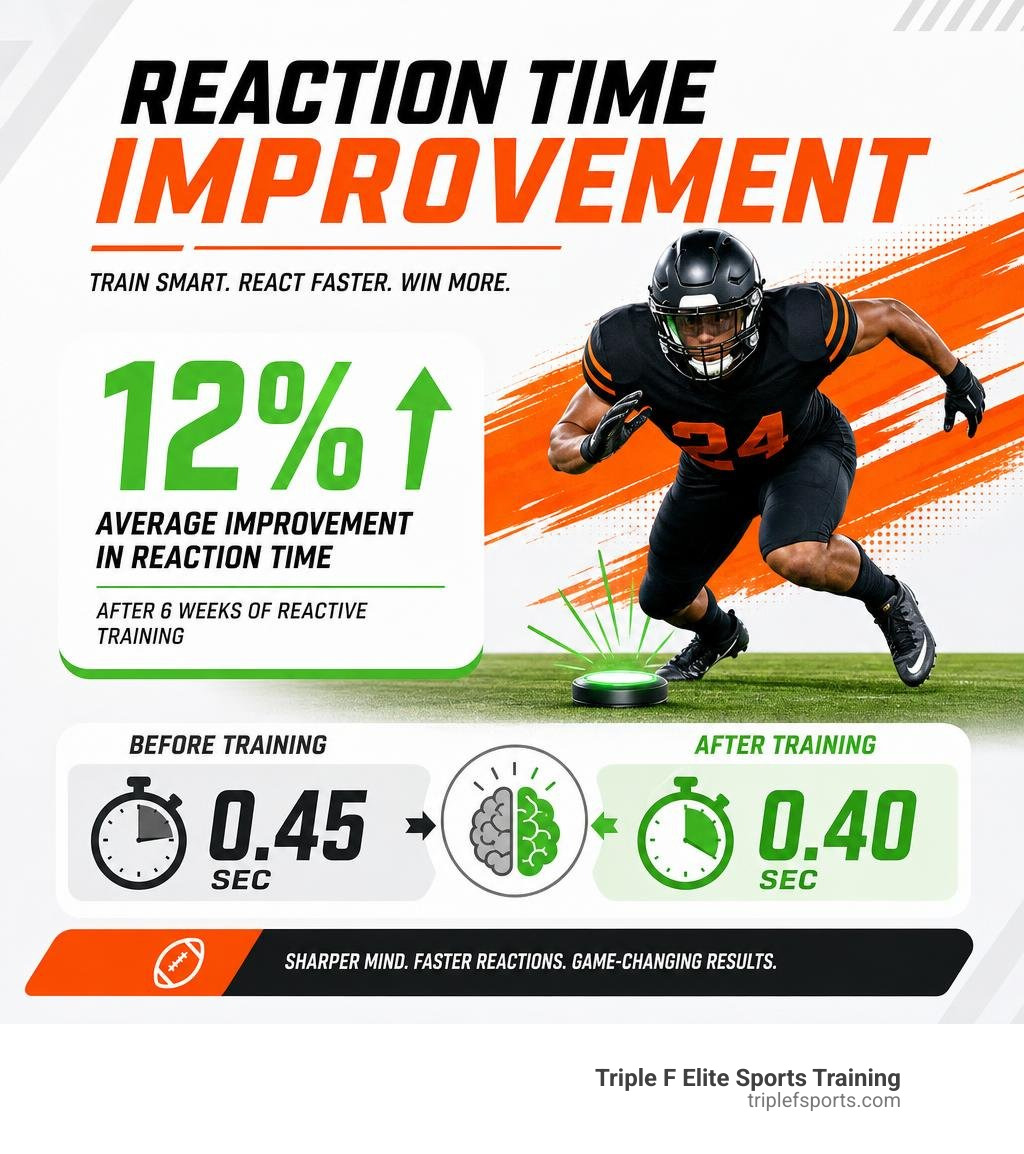
In addition to reaction training, managing player data is crucial for tracking long-term athletic progress. This is where professional evaluation software like SkillShark comes in. Rather than using outdated clipboards and manual spreadsheets, coaches can input player metrics—such as 40-yard dash times, vertical jumps, and position-specific grades—directly into a tablet.
This digital transition saves an incredible amount of administrative time. For instance, in large-scale player evaluations, SkillShark has saved organizations approximately 120 hours of data entry time (reducing what was previously an 8-hour-a-day task over 15 consecutive days to a streamlined, instant process). This allows coaches to spend less time typing and more time on the field coaching.
To see how these basic metrics fit into a beginner’s development plan, refer to The Ultimate Beginner’s Guide to Football Basic Drills.
Frequently Asked Questions about Football Training
Navigating athletic performance can be overwhelming. Here are some of the most common questions we receive from coaches, parents, and athletes.
What are the most common mistakes players make in agility training?
The three most common mistakes we see are:
- Looking Down: Players focus on their feet instead of keeping their eyes up. In a game, looking down prevents you from seeing oncoming defenders or open lanes.
- Crossing the Feet: During lateral movements or shuffles, players often cross their feet, which locks their hips and makes them highly vulnerable to losing their balance.
- Standing Too Upright: Players often stand too tall during cuts, which bleeds power and slows down their redirection speed. You must stay low and keep your hips loaded.
How can coaches teach safe tackling and contact preparation?
Safety must always come first. To teach safe tackling, we start with the Kneeling Tackle Drill. By starting on their knees just six inches apart, players isolate their hips and shoulders, learning to explode forward and wrap up without the impact of a full-speed run.
We strictly teach the head-up technique, ensuring players never lead with their helmets or drop their eyes. Additionally, we use tumbling drills—such as log rolls, shoulder rolls, and bear crawls—to teach young athletes how to fall safely and maintain body control when hitting the ground.
How often should football players perform agility and skill drills?
We recommend performing agility and position-specific skill drills two to three times per week. This frequency provides the central nervous system with enough repetition to build muscle memory without piling excessive fatigue onto heavy strength-training days. Always prioritize quality of movement over high volume to prevent overtraining and joint wear.
Conclusion
Mastering American football training skills is a journey that requires the right blend of position-specific technique, structured agility work, science-based strength training, and modern evaluation tools. Whether you are a youth athlete taking your first steps on the turf or an advanced player aiming for the collegiate level, training with purpose is what will set you apart.
At Triple F Elite Sports Training in Knoxville, Tennessee, we are dedicated to helping athletes unlock their full potential. Our professional, Christ-centered facility offers comprehensive sports performance training, specialized physical therapy, and expert coaching tailored to your athletic goals.
Ready to elevate your game? We invite you to experience our training firsthand. Claim your free first session and start building your custom athletic blueprint with us today by visiting Skilled-Based Training at Triple F.